Winters near Lake Erie are hard on lawns. Between heavy snow cover, road salt, plow damage, and the freeze-thaw cycle that comes with lake-effect weather, most yards in the area come out of winter looking rougher than they went in. The good news: most of this Winter Lawn Damage is fixable if you catch it early and repair it in the right order.
Here is a practical checklist for assessing and fixing winter lawn damage in Erie.
Common Winter Damage in Erie Lawns
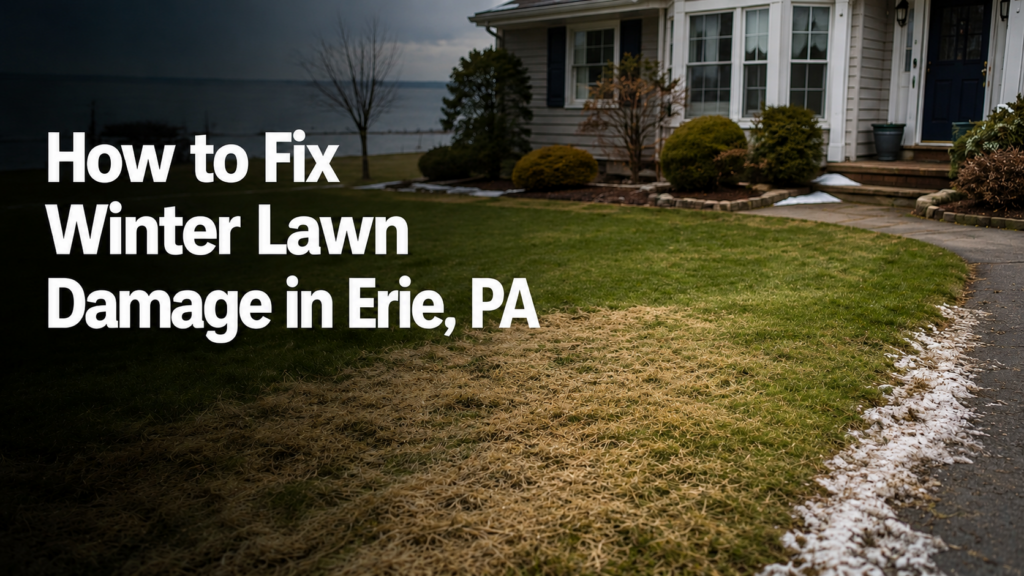
Snow mold. Those matted, straw-colored patches you see once the snow melts are usually snow mold, a fungus that thrives under snow cover that sits on unfrozen ground for weeks at a time. Erie’s long snow season makes this especially common.
Salt damage. If you live near a road, sidewalk, or driveway that gets salted, look for browning or dead grass in strips along the edges. Salt draws moisture out of grass roots and can linger in the soil into spring.
Plow and shovel damage. Compacted ruts, torn-up sod, and bare strips along the curb are typical where plows pile snow or scrape too close to the lawn edge.
Freeze-thaw heaving. Repeated freezing and thawing can push soil and even small plants upward, leaving an uneven, bumpy surface across the yard.
Step-by-Step Repair Checklist
1. Rake out dead and matted grass. For snow mold, a light raking once the ground dries out helps air circulate and speeds up regrowth in mildly affected areas.
2. Test and flush salt-damaged soil. In badly salted areas near driveways or sidewalks, watering deeply a few times in early spring helps flush salt out of the root zone before you reseed.
3. Aerate compacted areas. Freeze-thaw cycles and plow traffic pack soil down hard. Aerating first opens up the soil so new seed or sod actually takes root instead of sitting on hardpan.
4. Decide between seed and sod. Small to medium bare patches usually do fine with seed, especially if you are repairing before late spring. Larger areas, ruts, or spots you need to use again quickly are often better suited to sod. If you are not sure which fits your situation, our seed vs. sod comparison breaks down the trade-offs.
5. Level out heaved or uneven ground. Top-dress low spots with soil and rake even before reseeding so water does not pool in the repaired areas.
6. Hold off on heavy fertilizer until grass is established. Pushing fast growth on stressed, damaged turf can do more harm than good. Let repaired areas root in first.
Timing Matters
Late March through May is typically the window to assess and start repairing winter damage in Erie, once the ground has thawed and dried enough to work without compacting it further. Waiting too long into summer heat makes new seed harder to establish.
When Damage Is More Than a Patch Job
If your whole lawn came out of winter thin, uneven, or full of dead patches, spot repair might not cut it. A full renovation resets the lawn with proper grading, aeration, and seeding or sod, done right the first time.
Get a lawn repair and renovation quote for your Erie property.