If patches of your lawn feel spongy, pull up like a loose carpet, or you have noticed more crows, skunks, or raccoons digging up your yard at night, grubs are a likely cause. These small white beetle larvae live just under the soil surface and feed on grass roots, and Erie’s mix of humid summers and grassy suburban lots makes it a common target.
Here is how to spot grub damage, when to treat for it, and how to keep it from coming back.
What Are Lawn Grubs
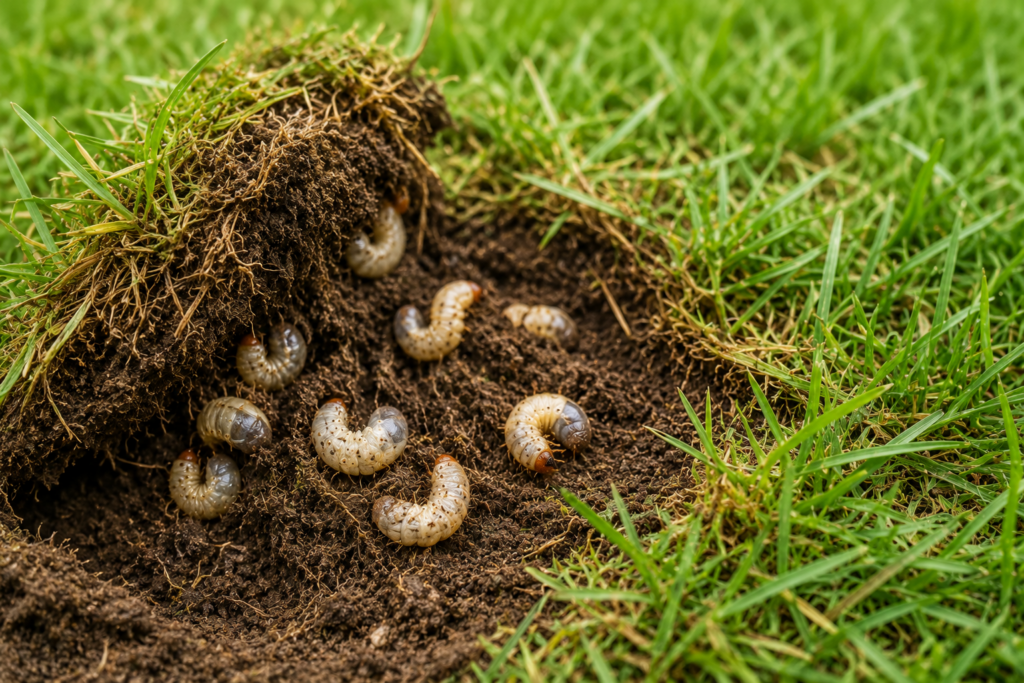
Grubs are the larval stage of beetles, most commonly Japanese beetles and June beetles in this region. Adult beetles lay eggs in the soil during summer, and the hatched larvae spend the following months feeding on grass roots below the surface. Because the damage happens underground, grub problems often go unnoticed until the lawn is already stressed.
Signs You Have a Grub Problem
- Brown, dying patches that peel back easily, like a loose rug, because the roots are gone
- Spongy or soft ground when you walk across the lawn
- Increased digging from birds, skunks, or raccoons hunting for grubs as food
- Damage that shows up most in late summer through fall
A simple way to check: cut a small square of turf in a suspect area and fold it back. Finding several C-shaped white grubs per square foot is a sign treatment is needed.
When to Treat in Erie, PA
Early to mid-summer (preventive treatment). This is the best window to apply preventive grub control, timed before eggs hatch. Preventive products target young larvae when they are most vulnerable, before root damage becomes visible.
Early fall (curative treatment). If damage is already showing, a curative treatment in early fall targets grubs while they are still active near the surface, before they burrow deeper to overwinter.
Treating too late in fall or in spring is far less effective, since grubs move deeper into the soil as temperatures drop and become harder to reach.
Grub Control and Your Broader Pest Program
Grubs rarely show up as an isolated issue. Lawns dealing with grub activity are often the same yards seeing pressure from other pests. Our flea and tick program and general perimeter pest control services are built to work alongside lawn treatments, so your yard is not fighting problems on multiple fronts with separate, uncoordinated treatments.
Prevention Beyond Treatment
A thick, well-fed lawn is naturally more resistant to grub damage, since healthy turf can tolerate some root feeding without showing visible stress. Keeping up with a consistent fertilization and weed control program strengthens root systems and makes it easier to catch problems early, before they turn into bare patches that need full repair.
Don’t Wait for the Patches to Spread
Grub damage tends to look minor at first and then spreads fast once populations grow. If you are seeing early signs, or just want to get ahead of it with a preventive treatment this season, we can help.
Get a grub control and pest protection quote for your Erie lawn.