Mulch does more than make garden beds look tidy. In Erie’s climate — with cold winters, a wet spring thaw, and humid summers — the right mulch protects plant roots, holds moisture, and cuts down on the weeding you’d otherwise be doing all season. Get the timing or amount wrong, though, and mulch can actually work against your lawn and beds instead of for them.
Here’s what Erie homeowners should know before their next mulch installation.
Why Mulching Matters More in Erie’s Climate
Erie sits close enough to the lake that soil temperature and moisture swing more than in drier inland areas. Mulch helps smooth out those swings:
- Insulates roots against sudden temperature drops in late fall and early spring
- Retains moisture during summer dry spells, reducing how often beds need watering
- Suppresses weeds by blocking sunlight before seeds can germinate
- Reduces erosion on sloped beds during Erie’s heavier spring rains
- Improves soil health over time as organic mulch breaks down and feeds the soil
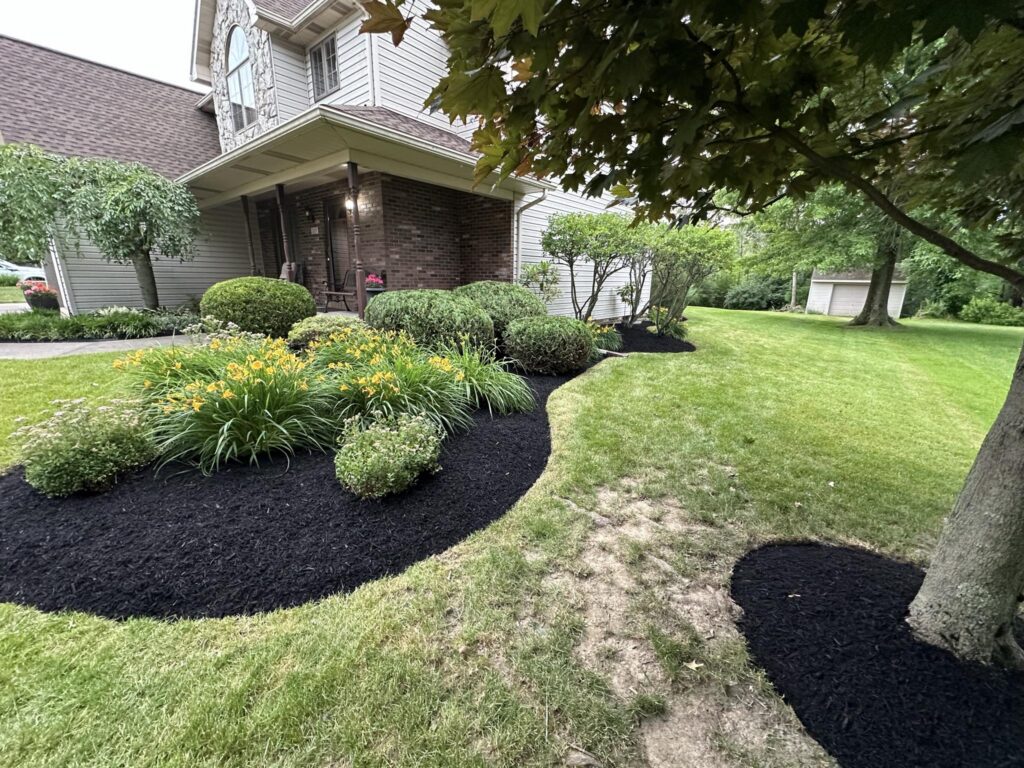
When to Mulch in Erie, PA
Timing matters as much as the mulch itself:
Spring (late April–May): The most common mulching window. Wait until the soil has warmed and dried out from the spring thaw — mulching too early traps cold, damp soil against plant roots and can encourage rot.
Fall (October–early November): A second application before winter helps insulate root systems and protect perennials through freeze-thaw cycles, which are especially hard on plants in this region.
Avoid mulching in mid-summer heat unless beds are visibly thin — adding mulch during a heatwave can trap excess heat against plant stems.
How Much Mulch Do You Actually Need?
This is the question most homeowners get wrong. The right depth depends on what you’re mulching:
- Garden and flower beds: 2–3 inches is ideal. More than that can suffocate roots and prevent water and oxygen from reaching the soil.
- Around trees and shrubs: 2–4 inches, but always keep mulch pulled back a few inches from the trunk or stem (a “mulch volcano” piled against bark traps moisture and invites rot and pests).
- New plantings: Start slightly thinner, around 1–2 inches, and build up gradually as plants establish.
If you’re refreshing existing beds rather than starting fresh, you often only need enough new mulch to bring the total depth back up to 2–3 inches — not a full fresh layer on top of what’s already there.
Choosing the Right Mulch Type
Not all mulch performs the same way in Erie’s freeze-thaw winters:
- Shredded hardwood breaks down slower and holds together well on slopes, making it a solid all-around choice for most Erie properties.
- Dyed mulch holds color longer but can break down differently than natural wood — better suited for beds where appearance matters most.
- Pine bark or nuggets drain well and resist compaction, but can float and shift during heavy spring rain if beds aren’t bordered.
- Straw or shredded leaves work well as a temporary winter cover for vegetable gardens, though they’re less suited to permanent landscape beds.
Common Mulching Mistakes to Avoid
- Piling mulch against tree trunks or plant stems — this traps moisture against bark and is one of the most common causes of plant stress in mulched beds.
- Applying mulch too thick — beyond 4 inches, mulch can suffocate roots and prevent water from reaching the soil.
- Skipping the fall application — beds that go into winter without fresh mulch are more exposed to freeze-thaw root damage, which is common in Erie’s climate.
- Using the wrong mulch on slopes — lightweight or loose mulch types wash out easily during Erie’s spring rains without proper edging.
Get Mulching Done Right the First Time
Between correct timing, the right depth, and matching mulch type to your beds, mulching is one of those tasks that’s easy to do — but easy to get subtly wrong in ways that hurt your plants over a full season.
Aesthetic Turf Solutions handles mulch installation for Erie-area properties, from garden beds to full landscape refreshes, timed to our local climate and applied at the right depth for long-term plant health.